a shittonne of star wars fans watching tlj: hngggg bkeghhh WHYYYYY could yoda summon lightning as a force ghost???!?! they shouldn’t be able to impact the real world when they haven’t been able to before!!!
me watching thinking of the sudden possible possibility of hayden christensen returning as anakin skywalker, transcending death itself, and force ghost whooping his murderous, traitorous dumb ass of a grandson in episode 9:
Well, you
don’t *need* sex-ed to have sex so… lol seriously now, the jedi were not celibate.
“Jedi Knights aren’t celibate. The thing that is forbidden is attachments
and possessive relationships.” George Lucas.
Anakin was probably a virgin
because padawans weren’t allowed do much without their master’s permission. Meeting
new people outside the Order alone was rare for padawans and Anakin was known
for being isolated from the rest of his peers. By the time, he was a teen he didn’t
have close friends to experiment with. The
only people he was close to and spent lots of time alone with was Obi-wan and
Palpatine and PLEASE let’s not go there.
But that doesn’t mean he was clueless. Jedi had to learn about biology to
do their jobs as diplomats, they took pride in their knowledge and education. I
don’t believe basic biology would be something they would overlook, especially
if sex wasn’t forbidden. We know they had some sort of sexual education because
Ahsoka knew enough to understand innuendos.
“But ol’ Pellaeon’s
just having a spot of romance, if you know what I mean. It’s not like he
gets attached to any of them, is it? Is romance allowed? Can you have a spot of
romance if you don’t get attached?”
Ahsoka’s stripes became more vividly colored,
embarrassed. Yes,
she obviously did know what Coric meant by romance. It wasn’t the word
he usually used for it, but Ahsoka was only a kid, and Rex had decided from the
start that talking about that sort of thing was something best left to her
Jedi Masters. Yes, General Skywalker, I think that’s a job for you, sir. It
wasn’t a clone’s duty at all.
“Romance,” Ahsoka said stiffly, “is acceptable.
Jedi are not … celibate. Just … no attachment.” [No prisoners. Karen Traviss]
I think
Anakin and Padmé first time together was awkward because Anakin was awkward. I mean,
a awkward AF 19 years old having sex for the first time with the woman of his
dreams….it’s not going to smoothly lol
Yes and no.
He is the embodiment of everything our heroes have to overcome in their environment
and their nature. And, no, there’s no chance of redemption for him. There can’t
be. He is the force that corrupts.
He has a black irredeemable heart.There’s nothing that can be said about him that’s good. When we
first saw Vader in the original trilogy we thought he was the heart of darkness,
and nobody could be darker. But now we understand what happened to him. And one
of the exciting things about seeing this movie is that you can follow Vader
through Anakin’s journey every step of the way even if you don’t agree with the
choices he’s making. In part his decisions stem from his traumatic childhood,
and his impatient lust for power. And it’s that which my character takes and
then uses again him. When you’re playing
a character of solid blackness, that in itself is very interesting, in the
sense that you have no other motivation
other than the accumulation of power. It’s not so much about not having a moral
center, it’s just that the only thing that mattered is increasing power.“
– Ian McDiarmid
Palpatine
is an amalgamation of the worst humanity has to offer, he’s been compared to
Stalin, Hitler and a bunch of corrupt politicians. In the end, the evil he
caused was so insidious there was no deed good enough for him to redeem himself
and, more importantly, a man that corrupt would not even want redemption. Giving
him a tragic backstory wouldn’t matter because we were never supposed to sympathize
with him. He is not the tragic character of the the story and he does not need
to be humanized.
In the EU,
he’s a rich kid form a powerful family. he’s miserable with them but nothing
happens to justify what he became. He was simply greedy, arrogant and entitled.
The closest SW got to humanizing him was in Star Wars Underworld (a live action
show that was never made) where we would learn that Palpatine became evil because
a heartless woman was mean to him
No. The
Force has no conscience, it just is. It’s part of nature, not some omnipotent and
omniscient entity. The “will of the Force” is something the Jedi (and most
force-sensitives groups) came up to explain their relationship with the Force.
If something happened that had no logical explanation they knew of, it was the
will of the Force, if they needed justify their actions it was the will of the
force, etc.
Experimenting
with the Force, in most cases, is considered wrong because the Jedi said so. Many groups deal
with the Force their own way, the ones the Jedi Order deems tolerable are allow
to keep existing. The ones they consider wrong are destroyed (the Sith). But,
to be fair, the Sith used the Force for some pretty nasty things and the Force,
being part of nature of the galaxy, was more than just something to
experimented on indiscriminately. Too much meddling could lead to the entire
galaxy to dangerous places.
And then
the Jedi declared that to be born with Force powers was not a gift or a curse.
They insisted it was a calling. They
proclaimed the Force should never be used for selfish purposes, that all
Force-sensitive beings were obligated to use their powers for the benefit of
others. Many Force users joined the Jedi Order, but the Jedi were not
satisfied with their numbers. They
sought out the so-called wizards and demons, and gave them three options. Join
the Jedi, cease using Force powers, or die. [Darh Maul in Ryder Windham’s
The wrath of Darth Maul]
The Jedi
Order politicized the Force to keep their control over the galaxy. They had a
Force monopoly going on. They mixed politics with religion and things slowly
got mixed up. it got to a point they no longer could separate their political
goals from their religious ones. The will of the Senate/Council became the will
of the Force. Something that
was used to explain coincidences became a justification of the Council’s
decisions.
There isn’t
much scientific experimentation with the Force within the Jedi Order because they
prohibited, because it serves their political goals better.
“As Jedi learn more about the Force, it is
not unusual for them to form their own theories about how and why it works. They
question how, if the Force creates and sustains life, it can have a dark side.
Some arrive at the conclusion that the Force is not divided into dark and
light, that its energy is inherently positive, and that there is no “dark side”
waiting to corrupt them. Time and again, this conclusion has been proved
erroneous, and the Jedi who felt
compelled to test the limits of the Force rarely perceived the dangers of their
explorations. As they approached the brink of the dark side, some were
rescued by other Jedi or came back willingly when they saw the error of their
ways. Those who refused to renounce
their mistaken the beliefs were either exiled to the farthest reaches of the
galaxy, or destroyed.[Ryder’s Windham’s Jedi vs. Sith: The
Essential Guide to the Force]
The “balance” was another example of force-sensitives politicizing the
Force. The Sith wanted a chosen one to kill all the Jedi and the Jedi wanted a
chosen one to kill all the sith. But, truth is, the Force did balance itself
out when it created Anakin. the Sith vs Jedi conflict was political. Anakin
existence was enough, he didn’t HAVE to become a sith or a Jedi. all they had
to do was let nature take its course, you know, follow the “will of the Force”.
[Plagueis] had to see this Anakin Skywalker
for himself; had to sense him for himself. He had to know if the Force had
struck back again, nine years earlier, by
conceiving a human being to restore balance to the galaxy. […] There was
still a chance that the Council would decide that Anakin was too old to be
trained as a Jedi. That way, assuming he was returned to Tatooine … But if
not … If Qui-Gon managed to sway the Council Masters, and they
reneged on their own dictates …
Plagueis ran a hand over his forehead. Are we undone? he thought. Have you
undone us? [James Luceno. Darth Plagueis]
Plagueis knew enough to understand Anakin didn’t have to become a sith
or a Jedi to be a threat and do his job, something the Jedi never figured out
because they were too busy forcing Anakin to be exactly like them.
Palpatine.
It’s all Palpatine (and Anakin). Everyone played their part and influenced
Anakin’s decisions, however, even with all their influences Anakin wouldn’t
have fallen if it weren’t for Palpatine. ROTS shows us that. Everyone
influenced Anakin but he stills makes the right choice and tells Mace about
Palpatine. It’s Palpatine who pushes him.
When thinking
about who is responsible for what, picture this:
Jedi Order
was responsible for Anakin’s upbringing. They are responsible for failing to
raise a health person and for allowing a abuser to groom on of their students. They
are responsible for the adult Anakin became.
Palpatine
is responsible for manipulating Anakin into wanting join the Dark Side and
grooming him to be his perfect apprentice. He is responsible for Anakin’s
interest in the dark side.
Anakin is responsible
for his choices.
If you
remove the Jedi from the equation but not Palpatine, Anakin is still at risk of
being turned. But if you remove only Palpatine, Anakin is fine. If Anakin had
been raised by the Jedi without Palpatine presence, he wouldn’t have become
this amazing healthy and stable person but he wouldn’t have been tempted into becoming
Darth Vader. Remember, even after he had his first visions of Padmé’s dying Anakin
had no interest in joining the Sith until Palpatine tempted him with the Darth
Plagueis story.
But if you
remove only Obi-wan, Yoda, Mace or Padmé, Palpatine is still there to manipulate and
tempt Anakin.
When we
talk about the Jedi’s (or any other character) responsibility to Anakin, we are
talking about what they should’ve done to help Anakin not their responsibility for
Anakin’s choices. Take Obi-wan as an example, he’s responsible for Anakin
training and the man he became but he’s not responsible for Anakin’s choice to
join Palpatine.
Some might
be guilty of making Anakin more susceptible to Palpatine’s influence but no
one, other than Palpatine, pushed Anakin to the dark side.
Wow, that is a tough question. I haven’t read any of the old Legends stuff about growing up Jedi, so I’m just going to comment on what we see in the films and Clone Wars cartoon.
It’s important to note that no one, with the possible exception of Anakin, actually consented to join the Jedi. They were all drafted as infants or toddlers. From a very young age they are groomed for combat. @howtofightwrite has some excellent posts about children raised for combat. The goal of the Jedi Order’s childrearing and training practices is to create effective fighters with an intense loyalty to the Order and the cause they serve. They accomplish this through isolation, indoctrination, and the rigorous suppression of dissent. Children are pushed to do and be their best, but I seriously doubt that the Order is going to do anything which endangers their health before the age of ten or so. They aren’t going to beat them. They aren’t going to train them to the point of injury. Force-sensitive kids are a rare and precious commodity and the Order isn’t going to risk losing them to injury or the Darth Side.
By the time the kids are ten or so, then they’re willing to endanger them. We see this during the Gathering arc. The kids are sent into a cave where they undergo a test of character involving hallucinations, extreme temperatures, and potentially life-threatening situations. Ezra and Luke undergo something similar during the course of their training. Everyone consents to participating, but none of the people involve fully understand what they’re about to endure. In the case of Ezra, we see real proof that people have died during the test. We don’t know if anyone has died during the Gathering, but it is presented to the children as a real possibility at the outset. Tests for children that conceivably involve dying if you fail is pretty fucked up.
Tests and object lessons remain a pretty consistent thing with the Jedi from this point on. Initiates have to pass the Padawan Trials. Padawans have to pass the Knight Trials. Knights are assigned padawans to test their ability to handle losing said padawan. Teenagers are repeatedly placed in deadly situations with minimal support to see if they survive. A group of children are kidnapped and left to fend for themselves as Council members declare they’ll be fine and find their own way back if they’re worthy students.
This is all deeply fucked up and symptomatic of the way the Order views it’s members. Jedi, regardless of age, are disposable resources meant to serve a greater purpose. This is fundamentally dehumanizing and results in the various emotionally stunted messes we see on screen.
@howtofightwrite writes in another post about abusive trainers that the key to understanding abusive training scenarios is all about control. Abusive trainers want their trainees to serve them, their needs, and their interests, regardless of what is good for the trainee. I’m just going to quote a few paragraphs from the original post rather than rephrase because it’s just too perfect:
A character with an abusive instructor may become a great fighter, but they will also be emotionally crippled. Like a bully, they will feel the need to exert control over their environment, create their own little kingdoms, and lash out at those who threaten their authority.
A character who cannot embrace their teacher’s outlook will be shattered, chased by self-doubt, and end up too mentally insecure to succeed at warfare. Their confidence is crushed, and whatever they learn from their teacher they don’t have the fortitude to use.
That’s the consequence of an abusive instructor.
You embrace them and become like them.
Or…
You reject them, and they break you.
This is not physical, they break their student emotionally through neglect, through failure, by critically hampering their ability to succeed, by undercutting them, or changing the goalposts on them.
This is literally what happens to Anakin. We see this happen to him over the course of the Clone Wars series and films. We also see them do this to Ahsoka, especially during her trials. We also see a bit of this with Caleb in the Kanan comics when he gets yelled at for asking questions.
And so, to sum up, yes, the Jedi Order was an abusive training environment. They didn’t beat the initiates, but they did recklessly endanger their lives and emotional wellbeing as part of various tests. Their end goal was not to create functional, successful adults, but rather soldiers blindly fighting for their cause and they psychologically broke anyone who didn’t immediately fall in line.
Anakin and
Padmé first time was never described. I think the closest we got from a description of
this:
“In the
end, Anakin knew, the only thing that had saved him was Padmé, and the
single perfect day they spent together after their secret wedding. Her love.
Her patience. Her unquestioning acceptanceof everything the Jedi demanded
that he deny. [Karen Miller’s The Clone Wars: Wild Space]”
Btw, i
said I *think* they first time was awkward. It’s just my opinion 🙂
But Lucas revealed that despite their monastic regime,
Jedi were permitted to have sex.“Jedi
Knights aren’t celibate – the thing that is forbidden is attachments – and
possessive relationships.”
This quote is from a interview George gave to BBC News
in 2002. Here is
the link if you want to read the whole think.
As for
the childbearing part, that’s why I strongly believe they received sexual
education. The Jedi Order allowed sex but they totally against force dynasties.
They did not allowed force-sensitives to create families powerful in the Force
(this is one of the reason why some many of us believe the Skywalkers would’ve been
considered a problem if Anakin hadn’t fallen).
If sex was
allowed but babies were not, one would assume they taught them some preventive
measures.
“Those first Star Wars movies feel personal to a lot of viewers, but that feeling comes from the memories associated with them more than the movies themselves. At their core, they’re big, crowd-pleasing space operas with a vast, inventive playground of planets, aliens, and spaceships. […] I don’t watch Star Wars movies for the music of human speech; I watch them to marvel at crazy water-planets, laugh at R2-D2’s antics, and wonder what Captain Typho does in his downtime. That’s what I love about the prequels: Their imagination is vast, yet interactive; beautiful, yet recognizably human.”
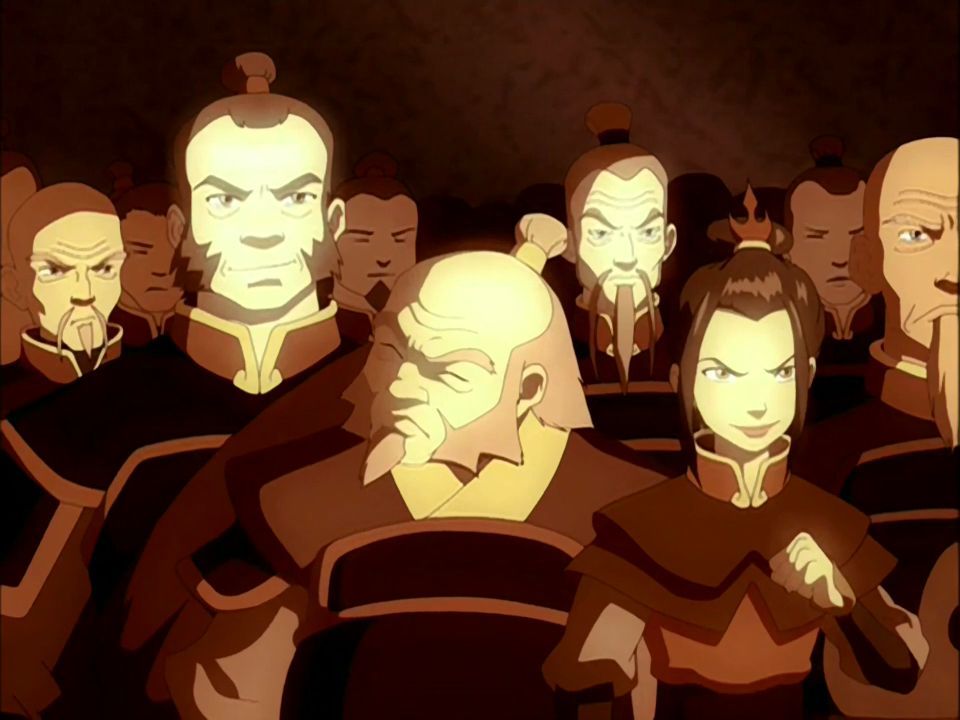
I was thinking a lot about this moment. Somehow it feels like the agni kai was a watershed moment not only for Zuko, but also for Iroh.
I think this is something that Iroh is intensely ashamed about – and it is the source of all the patience he has with Zuko and his determination to make things right for him.
Because Zuko’s scar is not just a testament of Ozai’s cruelty as a father, but is a scar on the soul of the entire Fire Nation.
Their supreme ruler publicly mutilates his own son, a 13-year old child, who merely spoke the truth about a nation that in a quest for power has lost perspective on the worth of human life – and everyone cheers.
The scarring and humiliation of the young prince (who should be really the symbol of the future to his people) is a grotesque public spectacle.
And Iroh, who was once next in line to leading these people, former great war hero, one of the most powerful benders, and still one of the nation’s leaders – all he can do is to look away.
The boy who spoke the truth, who stood up for kindness, who tries to do the right thing, who refuses to fight his own father, who begs for forgiveness – he faces completely alone his horrible punishment, and nobody speaks up for him.
And I think this is Iroh’s moment of truth – that disagreeing privately is not enough, he cannot look away anymore. He realizes that healing this boy could be the chance to heal the Fire Nation, that he is maybe destined to be their leader, but not from the throne of the Fire Lord. He has to get Zuko through this trauma and show him kindness, love and acceptance in a way he has never experienced it. He has to teach him that speaking up and saying sorry should not and will not lead to harsh punishment, that kindness is not weakness and cruelty is not strength; that honor is not violence, but doing the right thing.


 Raf's rants