Moon- Are you currently reading any books? If so, what book(s)?
Planets- If you could go anywhere, where would you go?
Mercury- Describe your aesthetic.
Venus- What’s your favorite tv show?
Earth- If you could be anyone else for a day, who would you want to be?
Mars- If you could change one thing about yourself, what would you change?
Jupiter- If you had to pick one color to use for an entire week, what color would you choose?
Saturn- How far would you go for those you care about?
Uranus- What would you say is your greatest achievement?
Neptune- Describe yourself in one sentence.
Pluto- If you could meet anyone, alive or dead, who would you meet?
Constellations- If you could have one talent, what would you want it to be? (can be magical or not)
Asteroid- When you die, what do you want to be done with your body?
Aquarius- What’s a topic you enjoy learning about?
Aquila- Do you prefer to read books or watch movies?
Aries- What is something you enjoy doing?
Auriga- If you had to pick one villain from any media, who would you rather have to face and why?
Bootes- If you could have any animal, wild or not, fake or not, which would you want?
Cancer- How do you want to be remembered?
Canis Major- How many friends do you have?
Capricornus- What’s a song lyric that you relate to?
Cassiopeia- What’s your favorite quote?
Cygnus- If you could go back to any time period for a couple days, when/where would you want to go?
Gemini- Do you have any siblings? How many?
Leo- If you could change the way any movie was made, which movie would you change?
Libra- If you could talk to your past self, what would you tell yourself?
Lyra- Would you rather be feared or loved?
Orion- What’s your favorite type of weather?
Pegasus- What’s your favorite music genre?
Perseus- What’s your favorite movie genre?
Pisces- Describe someone you love without saying their name.
Sagittarius- What do you do when you don’t feel well? What do you eat/drink?
Scorpius- If you had to pick someone to betray you, who would you pick?
Taurus- What makes you feel comfortable?
Ursa Major- If you had to pick any job to have, what job would you want?
Virgo- What do you value the most- artistic ability/creativity, musical ability, athletic ability, intellect, or work ethic?
Neutron- Are you more of a leader or a follower?
Supernova- How do you feel about yourself?
Supergiant- What’s something you like about yourself?
Red Giant- Would you get into a debate/argument with someone if you heard them saying something you disagree with or know to be wrong, or would you stay silent?
Red Dwarf- What’s your favorite smell? What smell makes you feel most comfortable?
Sticking a landing will royally fuck up your joints and possibly shatter your ankles, depending on how high you’re jumping/falling from. There’s a very good reason free-runners dive and roll.
Hand-to-hand fights usually only last a matter of seconds, sometimes a few minutes. It’s exhausting work and unless you have a lot of training and history with hand-to-hand combat, you’re going to tire out really fast.
Arrows are very effective and you can’t just yank them out without doing a lot of damage. Most of the time the head of the arrow will break off inside the body if you try pulling it out, and arrows are built to pierce deep. An arrow wound demands medical attention.
Throwing your opponent across the room is really not all that smart. You’re giving them the chance to get up and run away. Unless you’re trying to put distance between you so you can shoot them or something, don’t throw them.
Everyone has something called a “flinch response” when they fight. This is pretty much the brain’s way of telling you “get the fuck out of here or we’re gonna die.” Experienced fighters have trained to suppress this. Think about how long your character has been fighting. A character in a fist fight for the first time is going to take a few hits before their survival instinct kicks in and they start hitting back. A character in a fist fight for the eighth time that week is going to respond a little differently.
ADRENALINE WORKS AGAINST YOU WHEN YOU FIGHT. THIS IS IMPORTANT. A lot of times people think that adrenaline will kick in and give you some badass fighting skills, but it’s actually the opposite. Adrenaline is what tires you out in a battle and it also affects the fighter’s efficacy – meaning it makes them shaky and inaccurate, and overall they lose about 60% of their fighting skill because their brain is focusing on not dying. Adrenaline keeps you alive, it doesn’t give you the skill to pull off a perfect roundhouse kick to the opponent’s face.
Swords WILL bend or break if you hit something hard enough. They also dull easily and take a lot of maintenance. In reality, someone who fights with a sword would have to have to repair or replace it constantly.
Fights get messy. There’s blood and sweat everywhere, and that will make it hard to hold your weapon or get a good grip on someone.
A serious battle also smells horrible. There’s lots of sweat, but also the smell of urine and feces. After someone dies, their bowels and bladder empty. There might also be some questionable things on the ground which can be very psychologically traumatizing. Remember to think about all of the character’s senses when they’re in a fight. Everything WILL affect them in some way.
If your sword is sharpened down to a fine edge, the rest of the blade can’t go through the cut you make. You’ll just end up putting a tiny, shallow scratch in the surface of whatever you strike, and you could probably break your sword.
ARCHERS ARE STRONG TOO. Have you ever drawn a bow? It takes a lot of strength, especially when you’re shooting a bow with a higher draw weight. Draw weight basically means “the amount of force you have to use to pull this sucker back enough to fire it.” To give you an idea of how that works, here’s a helpful link to tell you about finding bow sizes and draw weights for your characters. (CLICK ME)
If an archer has to use a bow they’re not used to, it will probably throw them off a little until they’ve done a few practice shots with it and figured out its draw weight and stability.
People bleed. If they get punched in the face, they’ll probably get a bloody nose. If they get stabbed or cut somehow, they’ll bleed accordingly. And if they’ve been fighting for a while, they’ve got a LOT of blood rushing around to provide them with oxygen. They’re going to bleed a lot.
Here’s a link to a chart to show you how much blood a person can lose without dying. (CLICK ME)
If you want a more in-depth medical chart, try this one. (CLICK ME)
Hopefully this helps someone out there. If you reblog, feel free to add more tips for writers or correct anything I’ve gotten wrong here.
How to apply Writing techniques for action scenes:
– Short sentences. Choppy. One action, then another. When there’s a lull in the fight, take a moment, using longer phrases to analyze the situation–then dive back in. Snap, snap, snap. – Same thing with words – short, simple, and strong in the thick of battle. Save the longer syllables for elsewhere. – Characters do not dwell on things when they are in the heat of the moment. They will get punched in the face. Focus on actions, not thoughts. – Go back and cut out as many adverbs as possible. – No seriously, if there’s ever a time to use the strongest verbs in your vocabulary – Bellow, thrash, heave, shriek, snarl, splinter, bolt, hurtle, crumble, shatter, charge, raze – it’s now. – Don’t forget your other senses. People might not even be sure what they saw during a fight, but they always know how they felt. – Taste: Dry mouth, salt from sweat, copper tang from blood, etc – Smell: OP nailed it – Touch: Headache, sore muscles, tense muscles, exhaustion, blood pounding. Bruised knuckles/bowstring fingers. Injuries that ache and pulse, sting and flare white hot with pain. – Pain will stay with a character. Even if it’s minor. – Sound and sight might blur or sharpen depending on the character and their experience/exhaustion. Colors and quick movements will catch the eye. Loud sounds or noises from behind may serve as a fighter’s only alert before an attack. – If something unexpected happens, shifting the character’s whole attention to that thing will shift the Audience’s attention, too. – Aftermath. This is where the details resurface, the characters pick up things they cast aside during the fight, both literally and metaphorically. Fights are chaotic, fast paced, and self-centered. Characters know only their self, their goals, what’s in their way, and the quickest way around those threats. The aftermath is when people can regain their emotions, their relationships, their rationality/introspection, and anything else they couldn’t afford to think or feel while their lives were on the line.
Do everything you can to keep the fight here and now. Maximize the physical, minimize the theoretical. Keep things immediate – no theories or what ifs.
If writing a strategist, who needs to think ahead, try this: keep strategy to before-and-after fights. Lay out plans in calm periods, try to guess what enemies are thinking or what they will do. During combat, however, the character should think about his options, enemies, and terrain in immediate terms; that is, in shapes and direction. (Large enemy rushing me; dive left, circle around / Scaffolding on fire, pool below me / two foes helping each other, separate them.)
Lastly, after writing, read it aloud. Anyplace your tongue catches up on a fast moving scene, edit. Smooth action scenes rarely come on the first try.
More for martial arts or hand-to-hand in general
What a character’s wearing will affect how they fight. The more restricting the clothes, the harder it will be. If they’re wearing a skirt that is loose enough to fight in, modesty will be lost in a life or death situation.
Jewelry can also be very bad. Necklaces can be grabbed onto. Bracelets also can be grabbed onto or inhibit movement. Rings it can depend on the person.
Shoes also matter. Tennis shoes are good and solid, but if you’re unused to them there’s a chance of accidentally hurting your ankle. High heels can definitely be a problem. However, they can also make very good weapons, especially for someone used to balancing on the balls of their feet. Side kicks and thrusting kicks in soft areas (like the solar plexus) or the feet are good ideas. They can also (hopefully) be taken off quickly and used as a hand weapon. Combat boots are great but if someone relies more on speed or aren’t used to them, they can weigh a person down. Cowboy boots can be surprisingly good. Spin kicks (if a character is quick enough to use them) are especially nasty in these shoes.
If a character is going to fight barefoot, please keep location in mind. Concrete can mess up your feet quick. Lawns, yards, etc often have hidden holes and other obstacles that can mess up a fighter. Tile floors or waxed wood can be very slippery if you’re not careful or used to them.
Likewise, if it’s outside be aware of how weather will affect the fight. The sun’s glare can really impede a fighter’s sight. A wet location, inside or outside, can cause a fighter to slip and fall. Sweat on the body can cause a fighter to lose a grip on an opponent too.
Pressure points for a trained fighter are great places to aim for in a fight. The solar plexus is another great place to aim for. It will knock the wind out of anyone and immediately weaken your opponent.
It your character is hit in the solar plexus and isn’t trained, they’re going down. The first time you get hit there you are out of breath and most people double over in confusion and pain. If a fighter is more used to it, they will stand tall and expand themselves in order to get some breath. They will likely keep fighting, but until their breath returns to normal, they will be considerably weaker.
Do not be afraid to have your character use obstacles in their environment. Pillars, boxes, bookshelves, doors, etc. They put distance between you and an opponent which can allow you to catch your breath.
Do not be afraid to have your character use objects in their environment. Someone’s coming at you with a spear, trident, etc, then pick up a chair and get it caught in the legs or use it as a shield. Bedsheets can make a good distraction and tangle someone up. Someone’s invading your home and you need to defend yourself? Throw a lamp. Anything can be turned into a weapon.
Guns often miss their targets at longer distances, even by those who have trained heavily with them. They can also be easier to disarm as they only shoot in one direction. However, depending on the type, grabbing onto the top is a very very bad idea. There is a good likelihood you WILL get hurt.
Knives are nasty weapons by someone who knows what they’re doing. Good fighters never hold a knife the way you would when cutting food. It is best used when held against the forearm. In defense, this makes a block more effective and in offense, slashing movement from any direction are going to be bad. If a character is in a fight with a knife or trying to disarm one, they will get hurt.
Soft areas hit with hard body parts. Hard areas hit with soft body parts. The neck, stomach, and other soft areas are best hit with punches, side kicks, elbows, and other hard body parts. Head and other hard parts are best hit using a knife hand, palm strike, etc. Spin kicks will be nasty regardless of what you’re aiming for it they land.
Common misconception with round house kicks is that you’re hitting with the top of the foot. You’re hitting with the ball. You’re likely to break your foot when hitting with the top.
When punching, the thumb is outside of the fist. You’ll break something if you’re hitting with the thumb inside, which a lot of inexperienced fighters do.
Also, punching the face or jaw can hurt.
It can be hard to grab a punch if you’re not experienced with it despite how easy movies make it seem. It’s best to dodge or redirect it.
Hitting to the head is not always the best idea. It can take a bit of training to be able to reach for the head with a kick because of the height. Flexibility is very much needed. If there are problems with their hips or they just aren’t very flexible, kicks to the head aren’t happening.
Jump kicks are a good way to hit the head, but an opponent will see it coming if it’s too slow or they are fast/experienced.
A good kick can throw an opponent back or knock them to the ground. If the person you’ve hit has experience though, they’ll immediately be getting up again.
Even if they’ve trained for years in a martial art, if they haven’t actually hit anything before or gotten hit, it will be slightly stunning for the person. It does not feel the way you expect it too.
Those yells in martial arts are not just for show. If done right, they tighten your core making it easier to take a hit in that area. Also, they can be used to intimidate an opponent. Yelling or screaming right by their ear can startle someone. (Generally, KHR fans look at Squalo for yelling)
Biting can also be used if someone’s grabbing you. Spitting in someone’s eyes can’t hurt. Also, in a chokehold or if someone is trying to grab your neck in general, PUT YOU CHIN DOWN. This cuts off access and if they’re grabbing in the front can dig into their hand and hurt.
Wrist grabs and other grabs can be good. Especially if it’s the first move an opponent makes and the character is trained, there are simple ways to counter that will have a person on their knees in seconds..
Use what your character has to their advantage. If they’re smaller or have less mass, then they’ll be relying on speed, intelligence, evasion, and other similar tactics. Larger opponents will be able to take hits better, they’re hits may be slower depending on who it is but will hurt like hell if they land, and size can be intimidating. Taller people with longer legs will want to rely on kicking and keeping their distance since they have the advantage there. Shorter people will want to keep the distance closer where it’s easier for them but harder for a taller opponent. Punching is a good idea.
Using a person’s momentum against them is great. There’s martial arts that revolve around this whole concept. They throw a punch? Grab it and pull them forward and around. Their momentum will keep them going and knock them off balance.
Leverage can used in the same way. If used right, you can flip a person, dislocate a shoulder, throw out a knee, etc.
One note on adrenaline: All that was said above is true about it. But, in a fight, it can also make you more aware of what’s going on. A fight that lasts twenty seconds can feel like a minute because time seems to almost slow down while moving extremely rapidly. You only have so much time to think about what you’re doing. You’re taking in information constantly and trying to adjust. Even in the slow down adrenaline gives you, everything is moving very rapidly.
Feelings will be your downfall even more so than adrenaline. Adrenaline can make those feelings more intense, but a good fighter has learned not to listen to those feelings. A good fighter may feel anger at being knocked down or in some way humiliated – their pride taken down. Yet they will not act on the anger. Acting on it makes a fighter more instinctive and many will charge without thinking. Losing control of anything (adrenaline rush, emotions, technique, etc) can be a terrible thing in a fight.
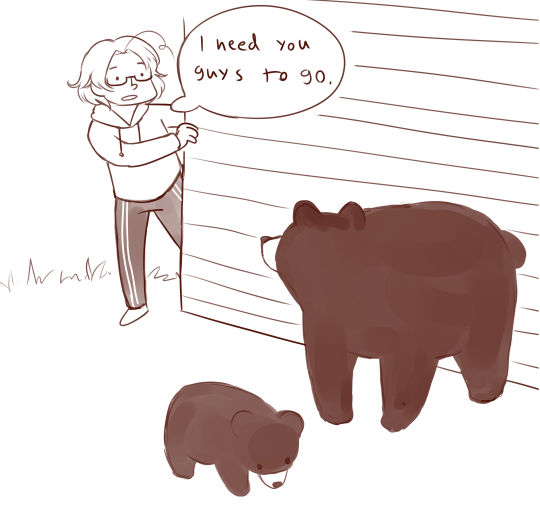
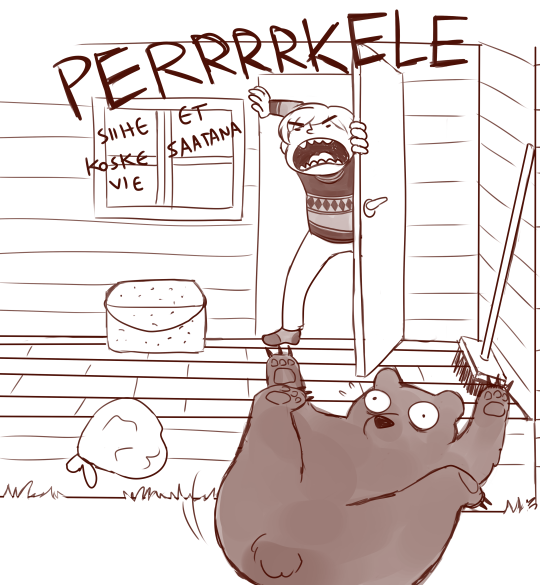
I asked my boyfriend in Canada once, how he deals with polar bears because I was curious about what to do and he was like, just be calm, let them know you’re there, and give them space and they’ll usually just go away.
After getting the Han Solo Card Game that recreates the Corellian Spike variant of Sabacc, I noticed it was easy to play and heaps of fun. Too bad I spent almost $50 (AUD) on it… Because you can very easily play it with a normal deck of cards.
Things you’ll need:
1: A deck of cards
2: A pair of dice
The first thing you will need to do is remove all the face cards (King, Queen, Jack) but keep the jokers in. They represent the sylops cards that there are only 2 of in Corellian Spike deck which represent 0. A Corellian Spike deck has 62 cards in it and a normal deck has 52, so you’ll be playing with 36 cards after removing the face cards. You could buy 2 identical decks and make it so there are 2 jokers and 6 of each number card, 30 positive and 30 negative. Black being positive and Red being negative.
Now with the deck prepared, here’s how you play. Each player takes turns being the dealer, rotating clockwise around the table (left of the dealer). The first thing you do is shuffle the deck (duh), then deal 2 cards to each player. Place the deck in the middle of the table and take the top card from that pile and place it face up next to it. This is the discard pile. Remember, the goal is to get as close to 0 as possible.
Here’s where the rules start to deviate from the Han Solo Card Game. Because you don’t have the credit chits (which have items on the backs and how much they’re worth) you’d start a betting round. Each player has the chance to make a bet going clockwise (left of the dealer). You have the option of having a small blind and big blind if you’d like. You could use chips, from the packet or poker style, or not have a betting round and play for fun.
After everyone has made a bet, the dealer has the first turn. Here are your options straight from the card game rule book:
Take the top card from the draw pile. If you want to, you can also place a card from your hand on the discard pile.
Take the top card from the discard pile.
If you want to, you can also place a card from your hand on the discard pile.
Do nothing. This is known as “standing”.
Remember that you CANNOT place a card in the discard pile if you did not take a card from either pile.
Next is the player to the left’s turn, then the player to their left, and so on until the player to the right of the dealer has had their turn. The dealer then roles the 2 dice. If it lands with 2 matching numbers, then everyone remembers how many cards they have, discard them face up in the discard pile, and the dealer deals each player the amount of cards they had before.
Then another betting round starts and then the dealer has their turn and so on. After each player takes their second turn, roll the dice again, and again after all players have had their third turn.The round is then over. The winning hand is the one closest to 0. It says in the rules that a positive score beats an equally negative score, ie: a hand of 5 beats a hand of -5. But I don’t like that because they’re both 5 away from 0 so decide with your group before the game if you want to house rule that rule out or keep it in. If there is a draw, players with the same hand draw a card from the draw pile and the closest card to 0 wins that tie.
Then you start again with the dealer changing clockwise for the next round. A good way to establish how long the game will last is to decide how many times each player will be the dealer. Once for a short game, twice for a twice as long game, etc.


 Raf's rants